Larkur
An experimental project to create a massively multiplayer game with the interface of a social network.
New users begin by creating their character which serves as the only representation of themself in Larkur. Real information like name, age, and location are never shared.
The account/character and user avatar creation flow.
This shows the main social event feed, and other interactions such as item management, quest acceptance, and foraging.
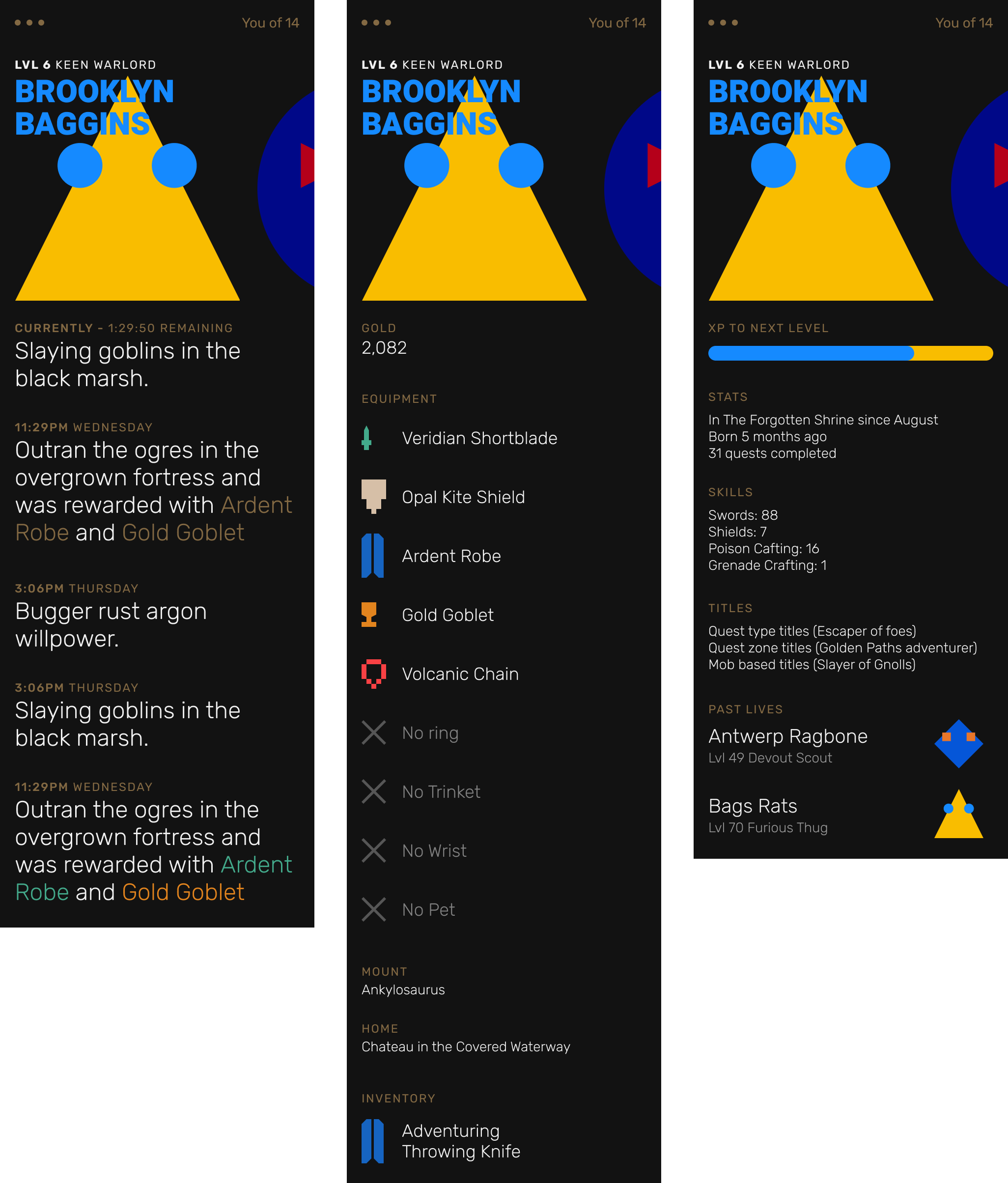
Character’s actions are automatically posted as statuses, and users can post their own statuses, and interact with other characters as well.
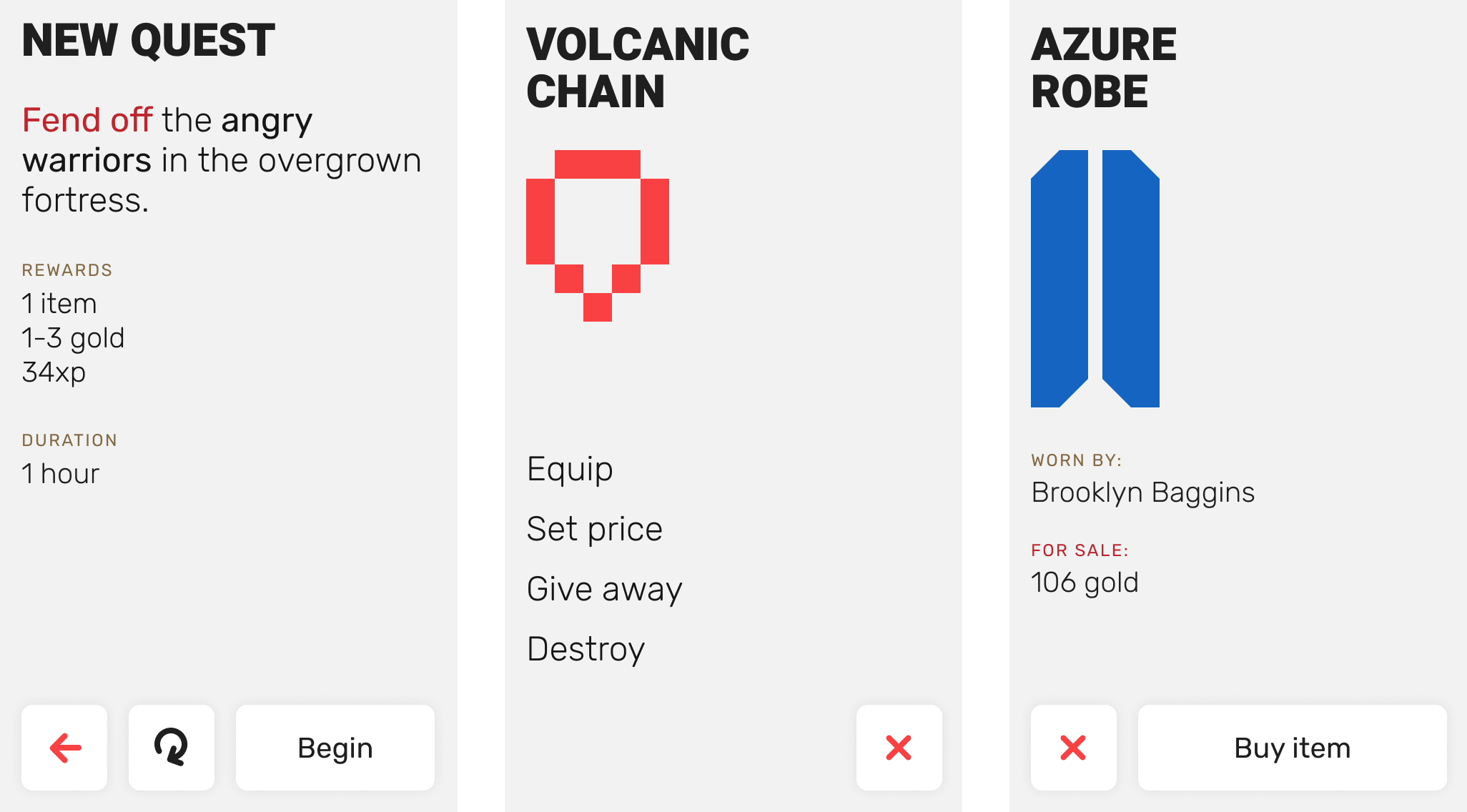
Characters travel to different zones to undertake quests. Quests are generated in formats like “Overthrow the gargoyles in the stinking temple” or “Barter with the noxious sorcerers in the buzzing marsh”. Completing these quests happens automatically, but takes one to three hours. Upon completion the character is rewarded with gold, items and experience.
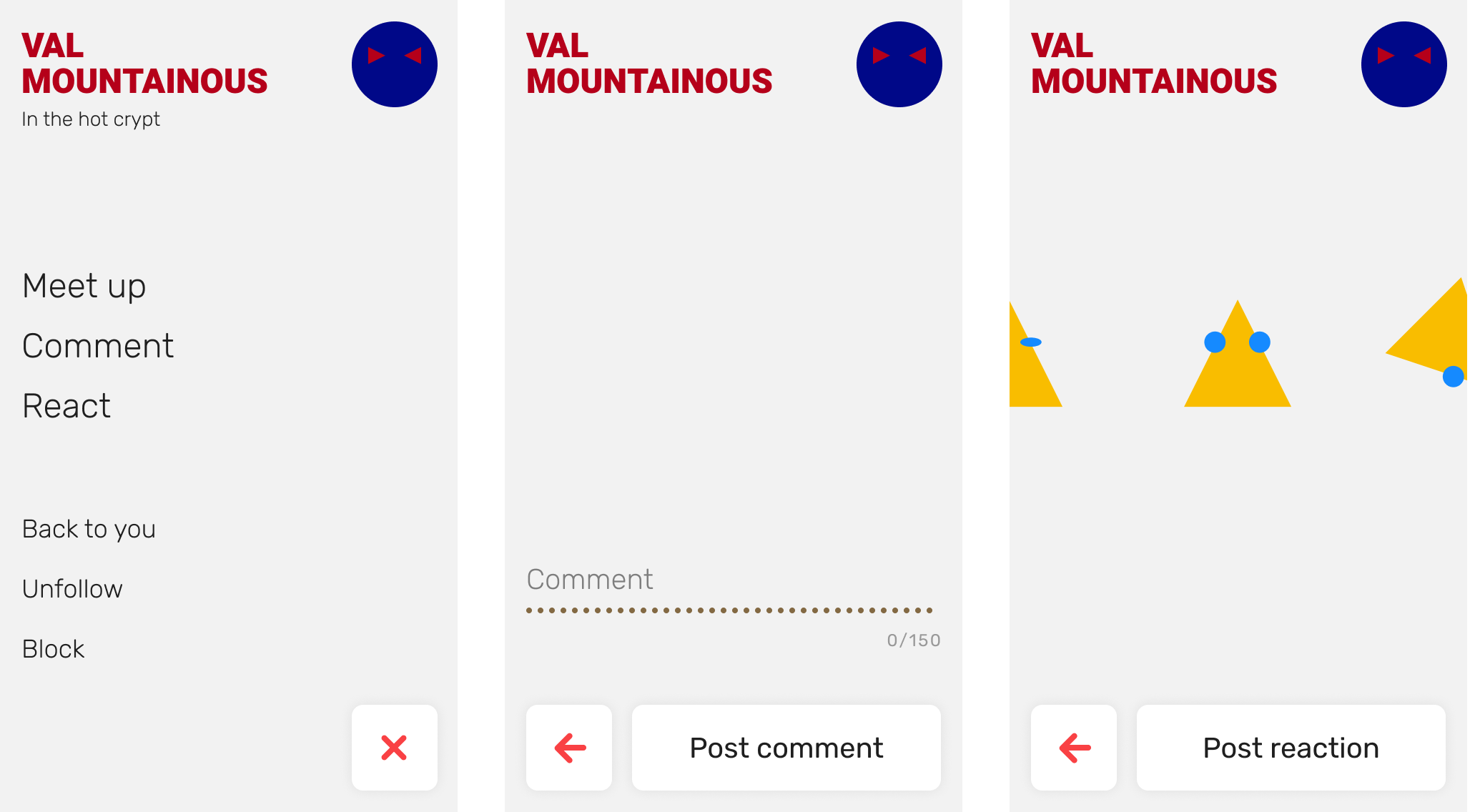
Like other social networks, users choose who they want to follow, and are made aware of other’s actions within Larkur. But the only content allowed is Larkur content. No external links can be shared, and all user posted content is automatically moderated to ensure no real-world content is posted.
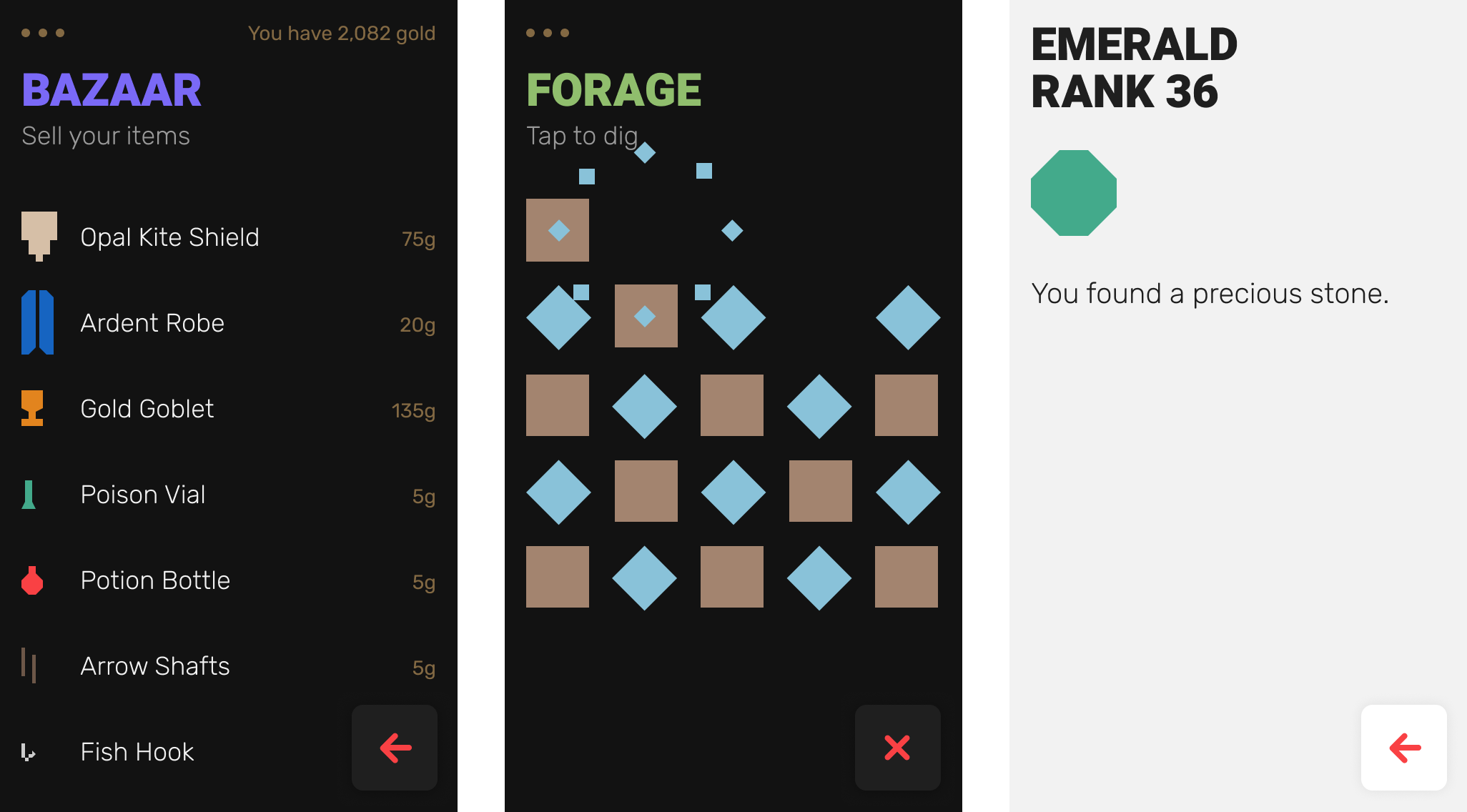
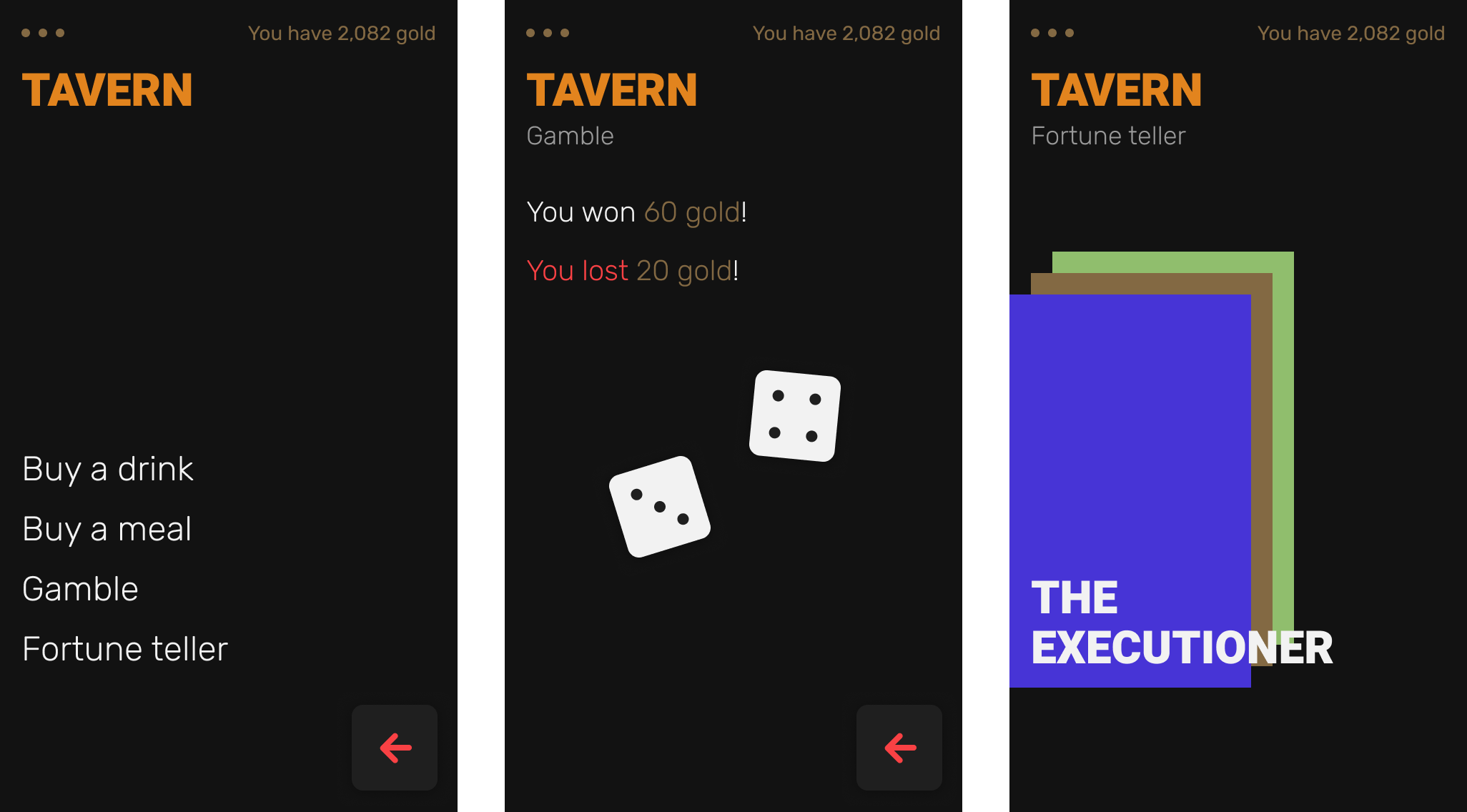
In addition to questing, users can sell items to other characters, travel to town to visit the tavern, bazaar, or fortune teller, amongst other things.

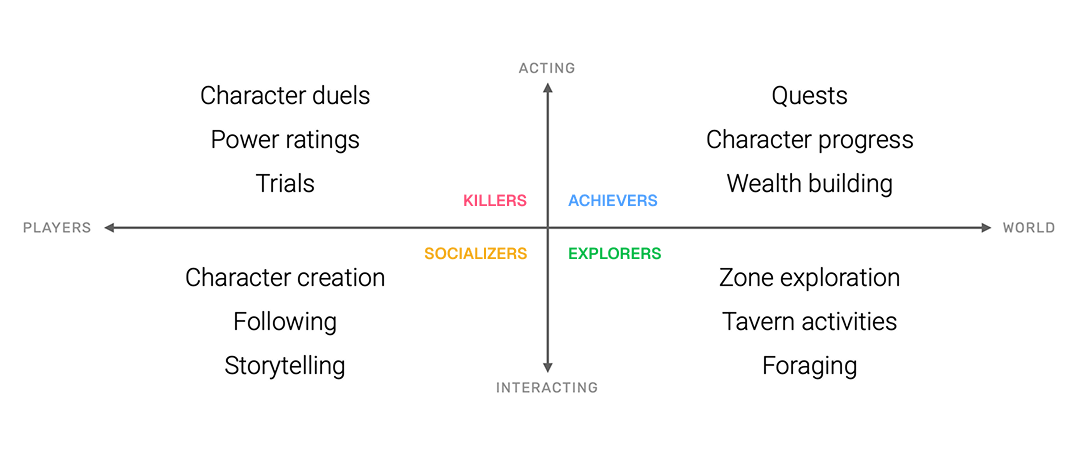
This is a graphic applying all the activities available in Larkur to the Bartle taxonomy of player types. This ensured interesting content for each kind of person.
Learnings
Of the 6 test users, 4 engaged with Larkur every day for the 6 week test period. There was high interest in social aspects, but only as they relate to the game mechanics; little interest was shown in fictional storytelling.
What was most lacking was communal happenings within the game world. There needed to be more shared, world-level events or experiences for users to feel meaningfully connected with each other.
Why did this not progress past a prototype? Because with only 4 regular users, the app was making over 1000 calls to the backend each day. When scaled to 1000 users, the cost to run the app in its current state was impossible!